How Can Properties Used to Describe Matter Be Classified
Mass volume length 2 Intensive depends on the type of matter not the amount present - Hardness density boiling point Extensive vs. Up to 24 cash back Properties of Matter Physical Changes.

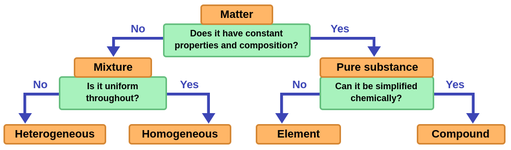
Classification Of Matter Chemistry Grade 10 Caps Openstax Cnx
Describing Matter Extensive Properties The mass of an object is a measure of the amount of matter the object contains.
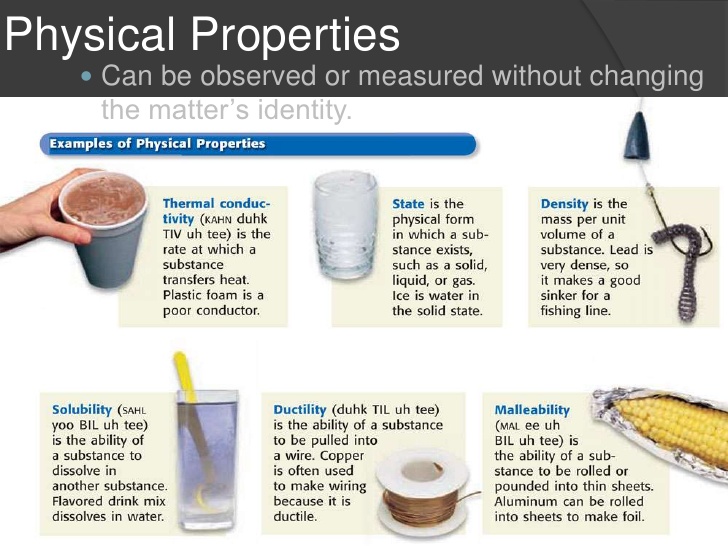
. C-XTvVG V-e-L-Q-HE or. All physical changes that involve a change from one state to another are reversible. The of an object is a measure of the amount of of an object is a measure of matter the object contains.
Matter can be described and classified by its observable properties. The volume of an object. Physical change extensive or intensive properties Properties used to describe matter can be classified as- Intensive and extensive properties because every sample has the same composition.
Matter can be classified according to physical and chemical properties. The three states of matter are solid liquid and gas. Up to 24 cash back Properties used to describe matter can be classified as 1.
_____ properties can be observed or measured without changing the composition of matter. Properties used to describe matter can be classified as _____ or _____ matter _____ is anything that has mass and takes up space. Density colour hardness melting and boiling points and electrical conductivity are all examples of physical properties.
An intensive property depends on the type of matter in a sample not the amount of matter. Matter the object contains. The properties used to describe matter are intensive and extensive property.
Any characteristic that can be measured such as an objects density color mass volume length malleability melting. Ever sample of a given substance has identical-. A physical property is an attribute of matter that is independent of its chemical composition.
And usually a change in composition occurs when the molecules of the substance reacts with another or energy to make a new substance. What cannot be used to classify forms of matter. Chemical properties can only be observed when.
Matter All things are made up of matter Matter is anything that takes up space To describe matter Scientists use specific terminology We can talk about the difference in an objects size and weight the way it feels its temperature and other things. Properties used to describe matter can be classified as 1. An extensive property is one that4.
Name seven common physical properties of matter then classify each of them as intensive and extensive mass - extensive volume - extensive width - extensive length - extensive height - extensive hardness - intensive color - intensive malleability - intensive. 1 Extensive depends on the amount of matter in the sample - eg. Mass ____ is a measure of the amount of matter the object contains.
Something that happens to a substance that changes its characteristics and can be reversible or irreversible. Soild Sorting and separating are ways to classify matter using what. Physical changes can be classified as reversible or irreversible.
Describing Matter Properties used to describe matter can be classified as extensive or intensive. Properties that do not depend on the amount of matter. Matter is anything that occupies space and has mass.
The physical properties used by scientists to describe all matter sight smell taste color texture mass weight volume and density. Why does every sample of a given substance have identical intensive properties. A substance undergoes a chemical change.
The of an object is a measure of the amount of 2. 2-PS1-1 Crosscutting Concepts Patterns Patterns in the natural and human designed world can be observed. The 4 the space occupied by the object.
Anything that has mass and takes up space. The properties that chemists use to describe matter fall into two general categories. An extensive property is one that of matter.
What physical properties can we use to classify matter. Physical properties used to describe matter can be classified as. Matter that has a uniform and definite composition physical property a quality or condition of a substance that can be observedd or measured without changing the substances composition solid matter that has a definite shape and volume liquid matter that has a definite volume and takes the shape of its container gas.
An extensive property depends on the amount of matter in a sample. The _____ of an object is a measure of the amount of matter the object contains. Structure and Properties of Matter Different kinds of matter exist and many of them can be either solid or liquid depending on temperature.
The of an object is a measure of 3. They include characteristics such as size shape color and mass. An intensive property is one that 5.
Many of these properties can be quantitative in nature. The space occupied by the object. Properties used to describe matter can be classified as.
A physical change involves the conversion of a substance from one state of matter to another without changing its chemical composition. Properties used to describe matter can be classified as extensive or intensive. Properties used to describe matter can be classified as extensive or intensive properties.
Means a material can be hammered into sheets without. Describing matter Intensive Properties. Physical properties are characteristics that describe matter.
Here the makeup of the initial substance changes. Chemical properties are properties we can observe only when a substance changes its composition. Cutting hair filing nails and cracking an egg are examples of irreversible physical changes.
Depends on the of matter. Depends on the of matter. Properties used to describe matter can be classified as _____ or _____.
Chemical properties can be used to identify a.

Compounds And Mixtures Graphic Organizer Google Search Teaching Chemistry Physical Science Middle School Matter Science
1 4 Classification And Properties Of Matter Chemistry Libretexts

Elements Compounds And Mixtures Classification Of Matter Free Distance Learning Compounds And Mixtures High School Science Teacher High School Science
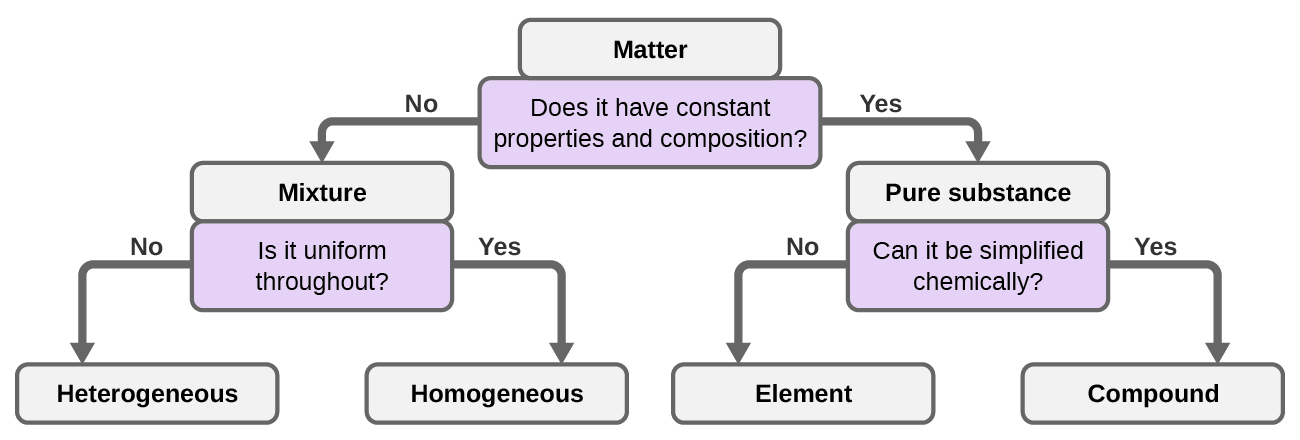
1 2 Phases And Classification Of Matter Chemistry

Chapter 1 4 Mixtures And Pure Substances Pure Products Elementary Science Teaching Science

States Of Matter Flow Chart With Classifying Matter Worksheet Matter Worksheets Flow Chart Properties Of Matter

In A Pickle Free Science Lesson Teaching Chemistry Chemistry Education

Elements Atoms And Molecules Organic Chemistry Books Science Lesson Plans Science Notes
.png?revision=1)
1 3 Classification Of Matter Chemistry Libretexts

Pin On Teaching
(171).jpg)
Classification Of Matter Quiz Proprofs Quiz

Classification Of Matter Chemistrygod
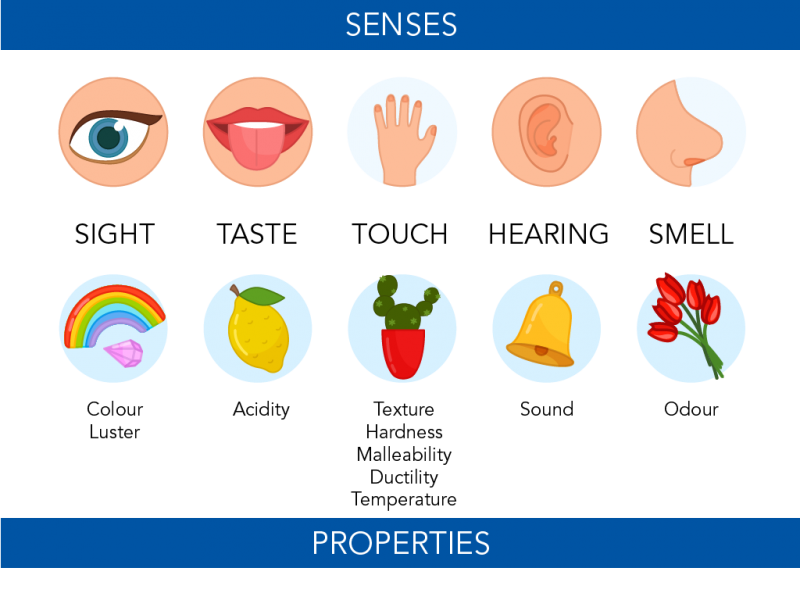
Describing And Classifying Matter Let S Talk Science

Pin On Answer Blocks

1 4 Classification And Properties Of Matter Chemistry Libretexts

Matter Pure Substances And Mixtures Matter Worksheets Matter Science Physical And Chemical Properties

Classification Of Matter Concept Map Teaching Chemistry Chemistry Basics Chemistry Lessons

Classifying Matter Anchor Chart Science Anchor Charts Matter Anchor Chart Matter Science
Classification Of Matter Labster Theory


Comments
Post a Comment